What Is Double-Sided Grinding?
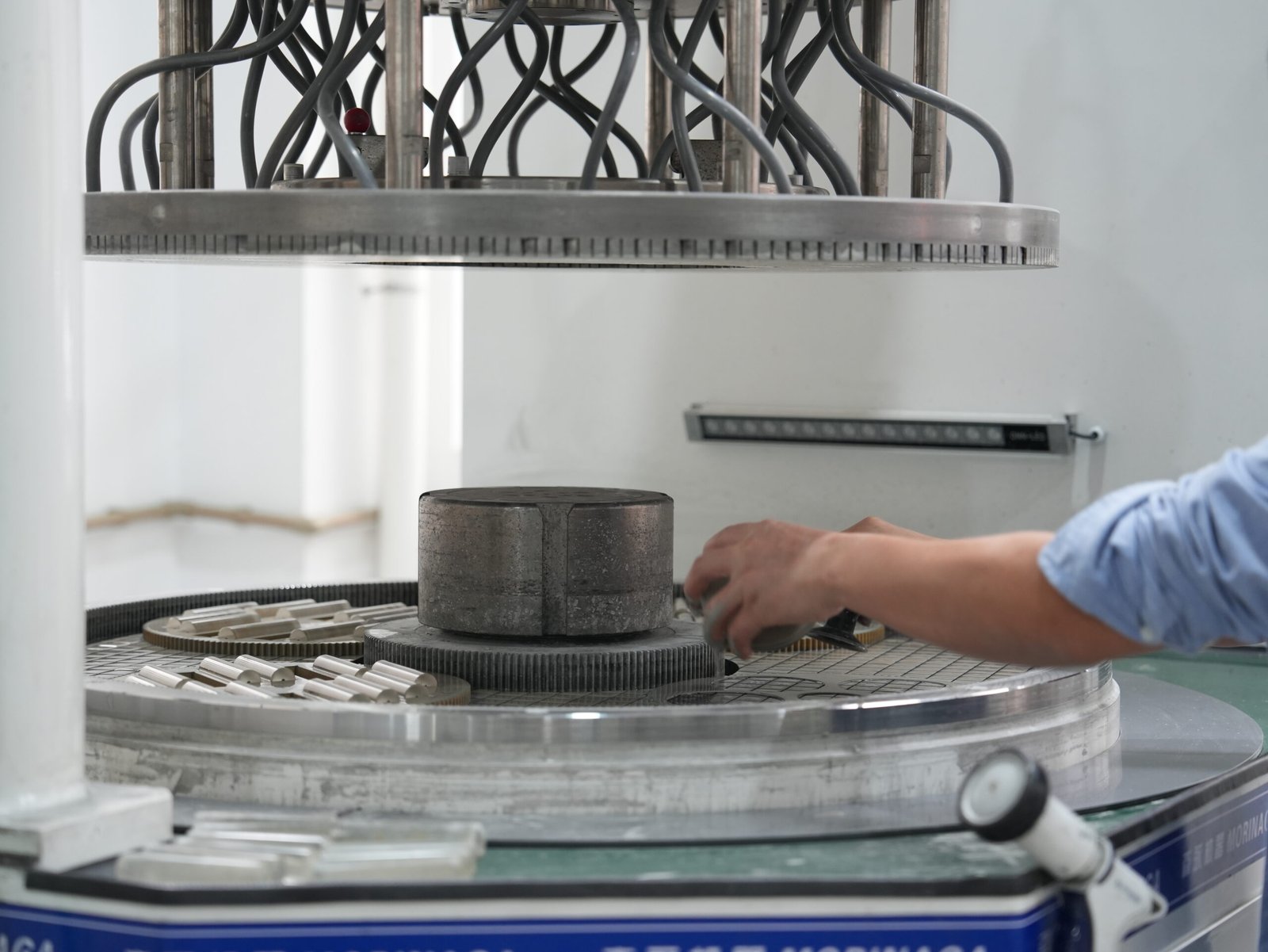
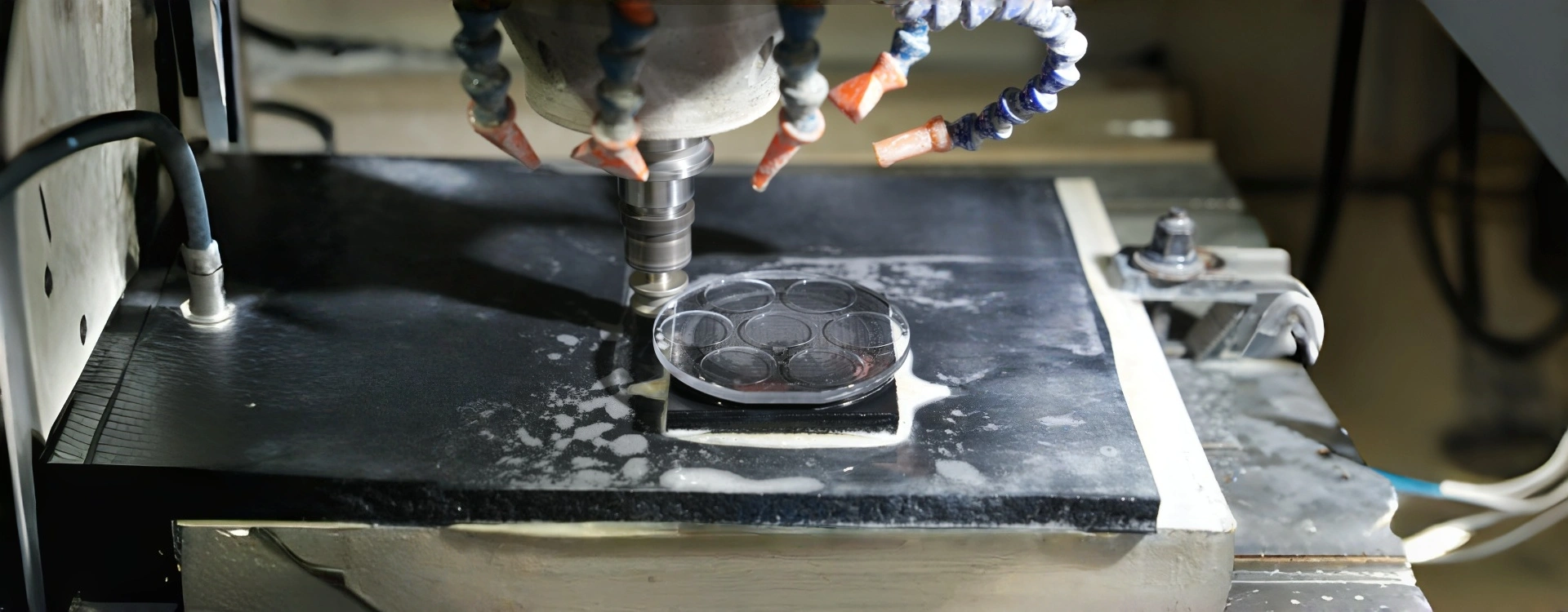
Double-sided grinding — also known as double-sided lapping — is a precision material removal process in which both surfaces of a glass workpiece are ground simultaneously between two counter-rotating lapping plates. Abrasive slurry or fixed-abrasive pads are used to reduce thickness, correct flatness, and improve surface uniformity in a single pass. Unlike single-sided grinding, the double-sided process ensures that both faces are processed under identical conditions, minimizing the risk of warpage and residual stress imbalance. It is typically used as a preparatory step before polishing, or as a final step when a controlled matte surface finish is required.
Process Capabilities
- Thickness Tolerance: ±5 µm (standard) / ±2 µm (precision)
- Parallelism: ≤ 2 µm across full substrate
- Flatness: ≤ 5 µm (λ/4 achievable after polishing)
- Surface Roughness (Ra): 0.4 – 1.6 µm (depending on abrasive grade)
- Substrate Diameter: Up to 300 mm (round); rectangular substrates available
- Material Removal Rate: 5 – 30 µm/min (material-dependent)
- Batch Capacity: Multi-piece planetary carriers for high-volume runs
Surface Finish Standards
- Ra ≤ 0.4 µm — Fine lapping, suitable for direct bonding or thin-film deposition
- Ra 0.4 – 0.8 µm — Standard lapping, ready for downstream polishing
- Ra 0.8 – 1.6 µm — Coarse lapping, used for thickness reduction and stock removal
- Scratch-Dig: 80-50 (post-lapping); 40-20 achievable after polishing
- Edge Condition: Chamfered or beveled edges available to prevent chipping
- Cleanliness: Ultrasonic cleaning and inspection included after grinding
Typical Applications
- Semiconductor Wafer Preparation: Silicon and quartz wafer thinning and planarization
- Optical Flat Substrates: Windows, etalons, and filter blanks requiring tight parallelism
- Laser Gain Media: Nd:YAG and other crystal slabs ground to precise thickness
- Display Glass Processing: Uniform thickness reduction for LCD and OLED substrates
- Microfluidic Devices: Flat glass wafers for bonding and channel formation
- Precision Spacers & Shims: High-parallelism glass components for metrology instruments
Custom Specifications
We accept custom grinding orders for both prototype and production volumes. Substrates can be supplied by the customer or sourced from our material inventory. Custom parameters include target thickness, removal depth per side, abrasive grade selection (aluminum oxide, silicon carbide, or diamond slurry), and carrier design for non-standard geometries. Post-grinding services — including polishing, dicing, coating, and inspection — are available as part of an integrated processing workflow. All finished substrates are individually measured and documented with a full dimensional report.
Single-Sided vs Double-Sided Grinding
| Parameter | Single-Sided Grinding | Double-Sided Grinding |
|---|---|---|
| Surfaces Processed | One surface per pass | Both surfaces simultaneously |
| Parallelism | Moderate (≤ 10 µm typical) | High (≤ 2 µm achievable) |
| Flatness | Good (depends on fixture) | Excellent (self-correcting geometry) |
| Residual Stress | Higher (asymmetric loading) | Lower (symmetric, balanced removal) |
| Warpage Risk | Higher for thin substrates | Significantly reduced |
| Processing Time | Two setups required | Single setup, shorter cycle time |
| Batch Throughput | Lower | Higher (planetary multi-piece carriers) |
| Typical Use Case | One-sided surface prep, beveling | Wafer thinning, optical flats, precision blanks |