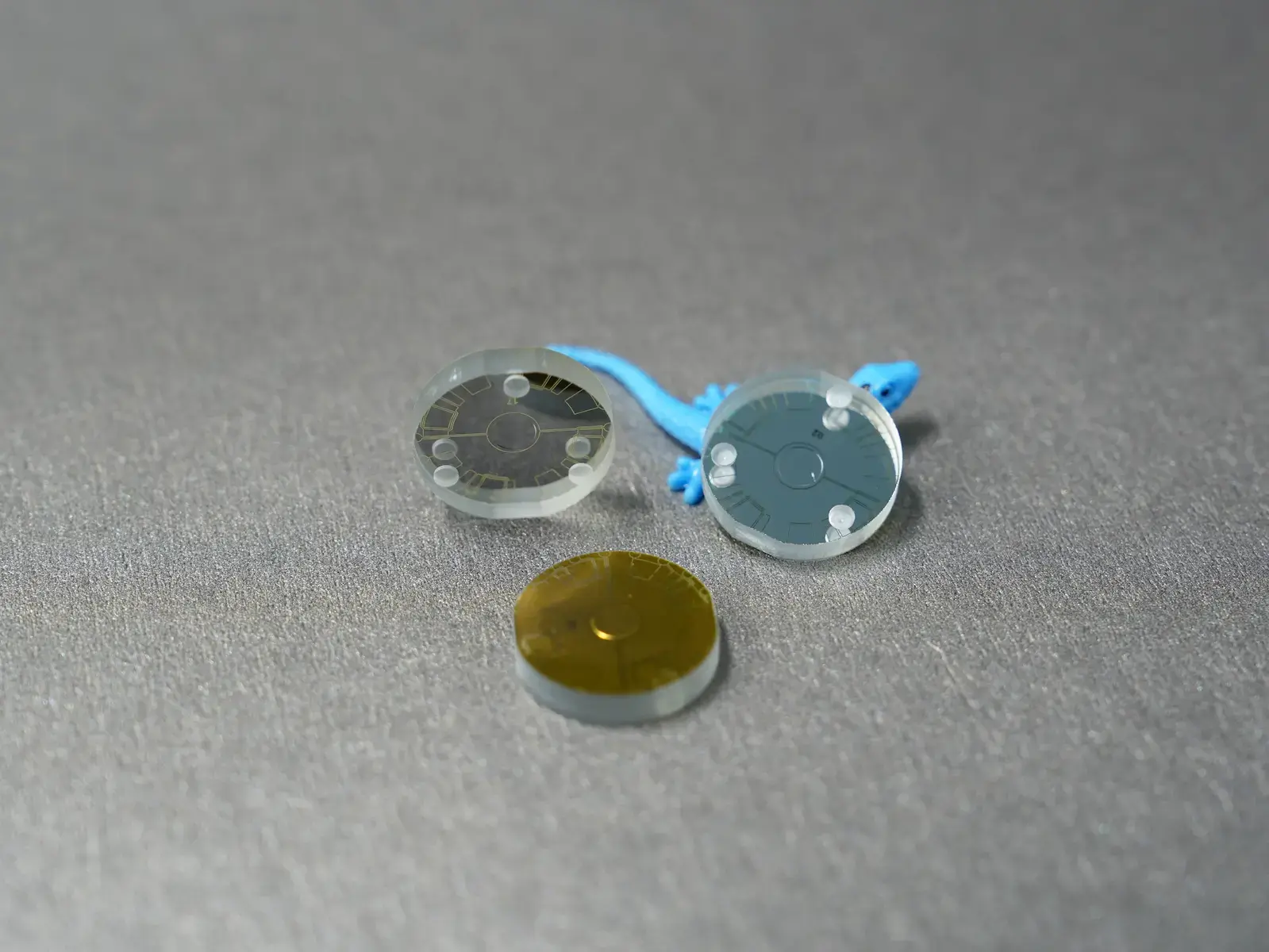
Why Use Gold-Plated Glass? (Engineering Properties)
Gold is chosen for advanced optical and electronic applications due to its unique physical properties:
- Maximum Infrared (IR) Reflectance: Gold reflects over 98% of near-infrared and mid-infrared light, making it the superior choice for IR mirrors, laser cavities, and aerospace thermal control.
- High Electrical Conductivity: Ideal for transparent or integrated electrodes, heated optical windows, and EMI/RFI shielding.
- Corrosion & Oxidation Resistance: Unlike silver or copper, gold does not tarnish or oxidize, ensuring stable long-term performance in harsh environments.
- Solderability: Gold coatings around the perimeter of a glass window allow it to be soldered directly to metal housings for true hermetic seals (commonly used in optoelectronics and sensors).
- Biocompatibility: Heavily used in medical and biological research, such as Surface Plasmon Resonance (SPR) chips and microarray slides.
Our Coating & Dicing Process (The Technical Advantage)
Applying gold to glass and cutting it down to micro-sizes requires specialized expertise. Standard processes often result in peeling films and fractured edges. Here is how we ensure industrial reliability:
- The Crucial Adhesion Layer: Gold does not bond naturally to glass. We utilize advanced Physical Vapor Deposition (PVD) to first apply an ultra-thin Titanium (Ti) or Chromium (Cr) adhesion layer, followed by the high-purity Gold (Au) layer. This guarantees the film will not peel or fail tape tests.
- Controlled Film Thickness: We can deposit gold layers ranging from a few nanometers (semi-transparent) to several microns (thick layers for wire bonding or soldering), depending on your specific requirements.
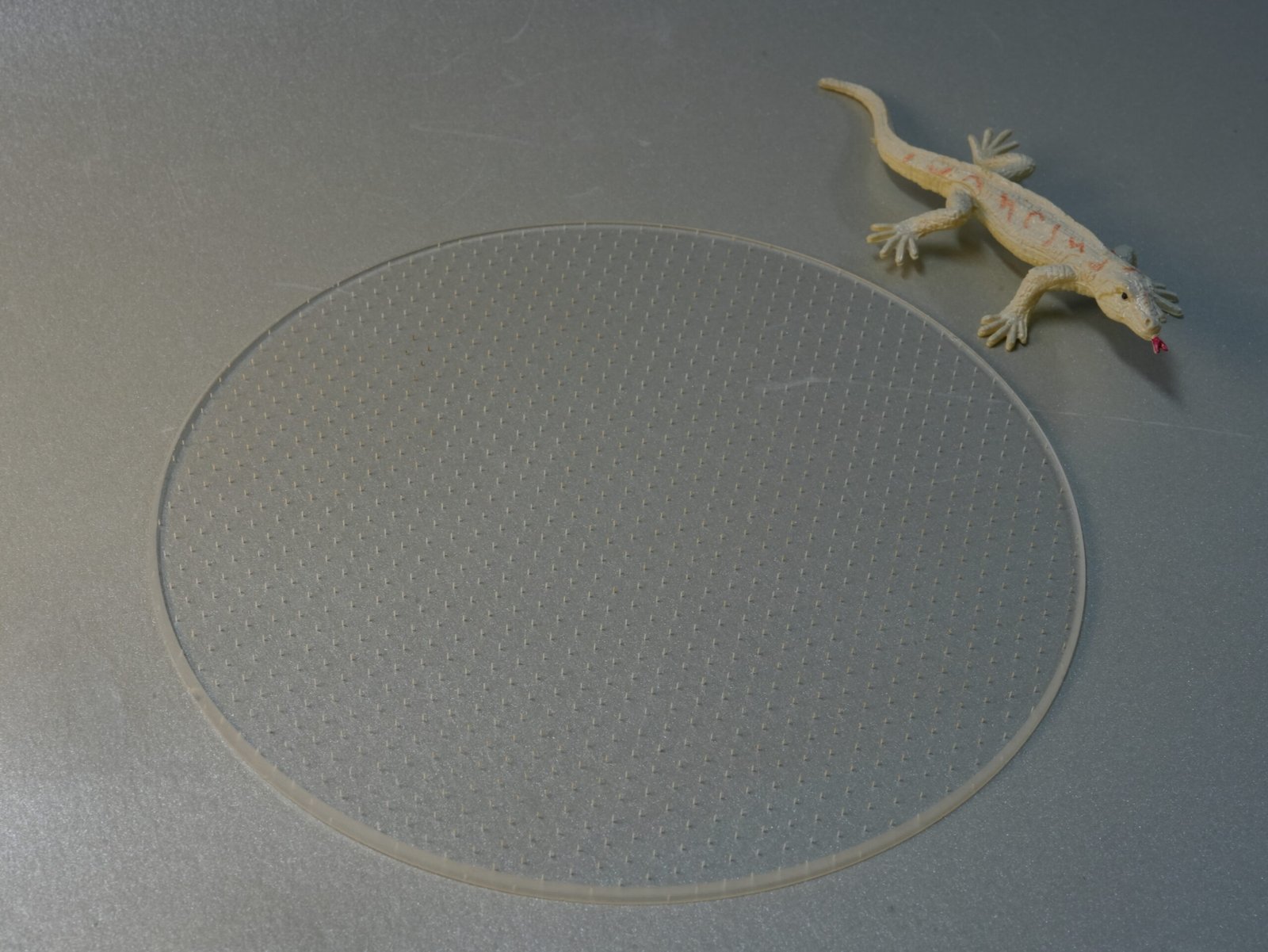
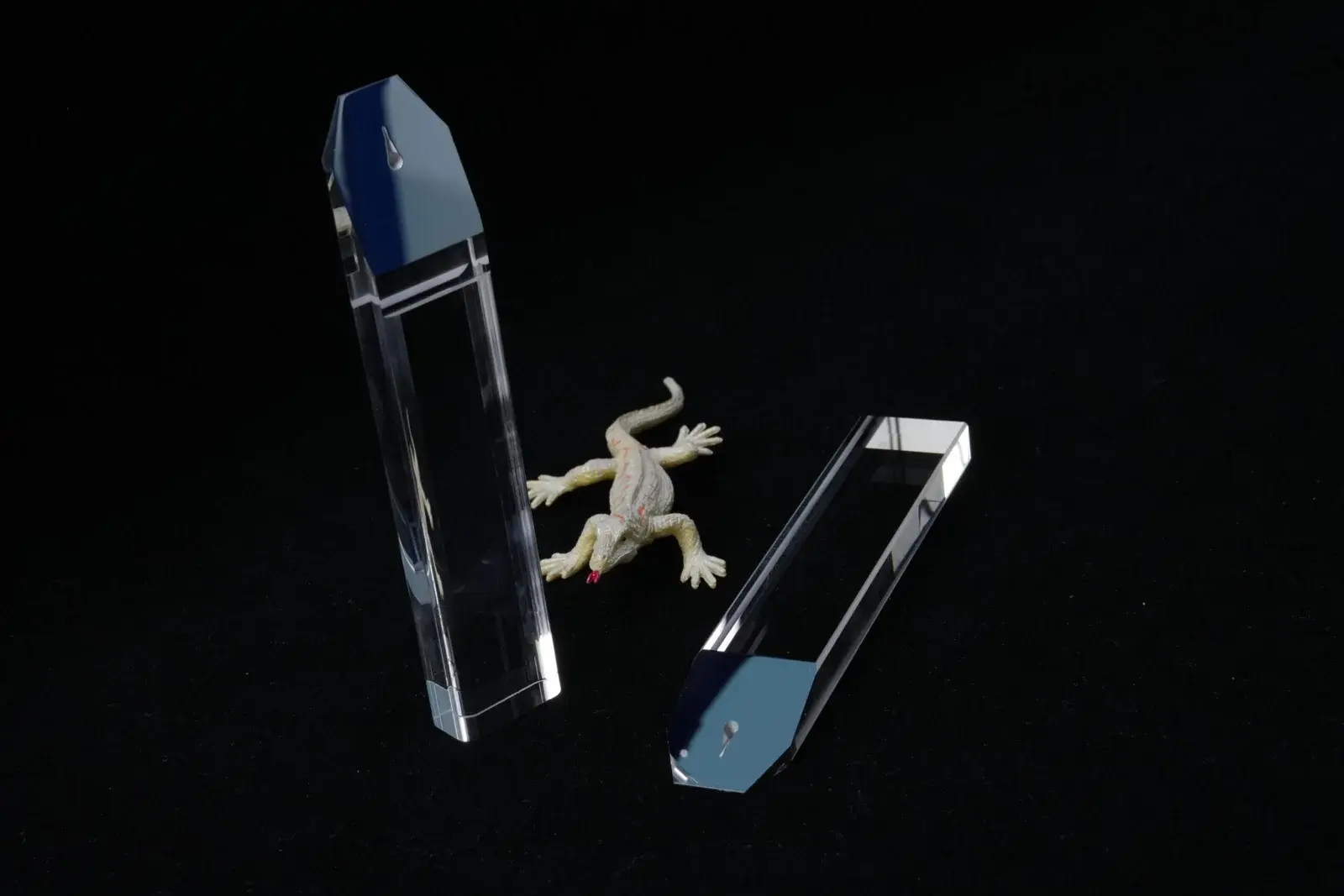
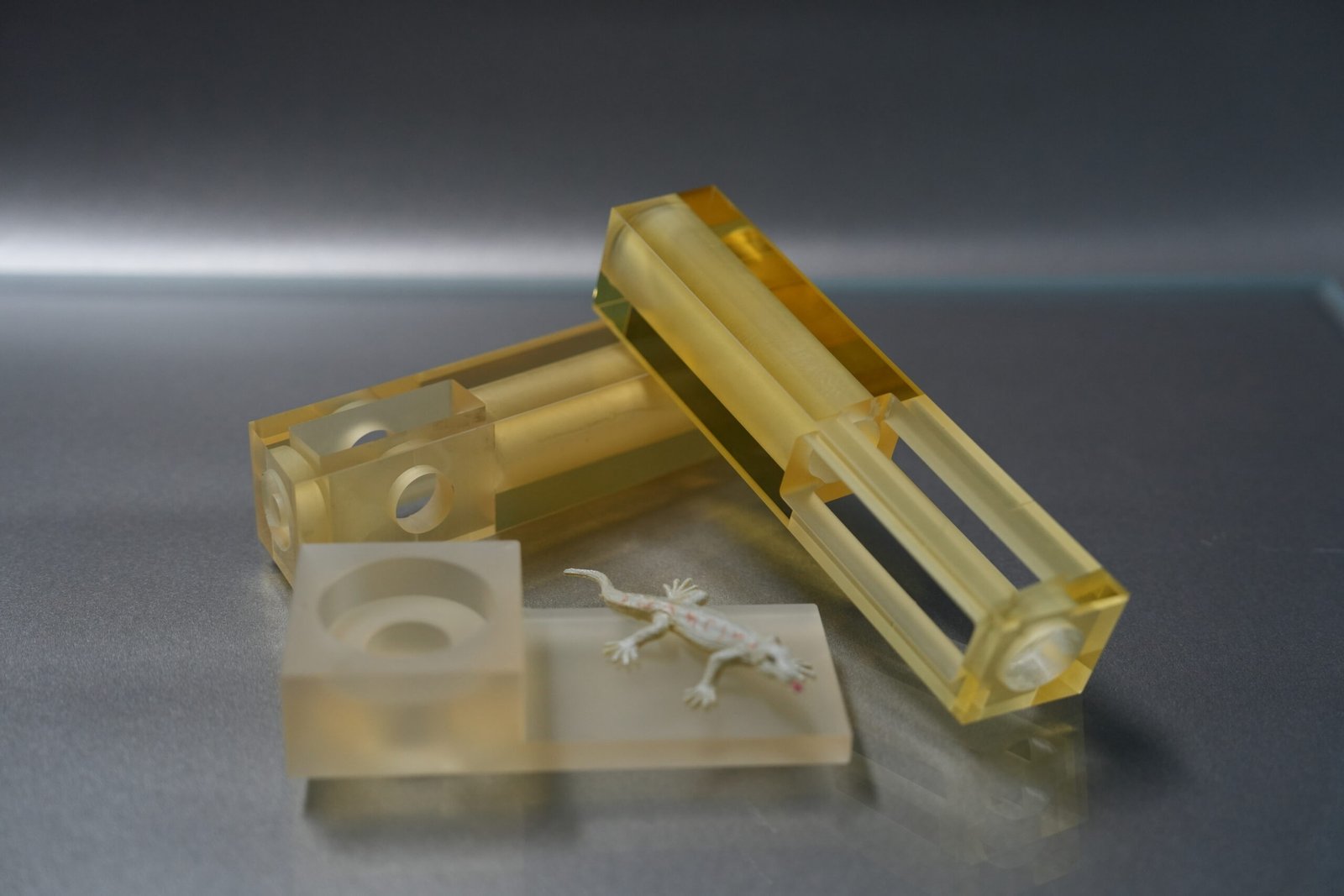
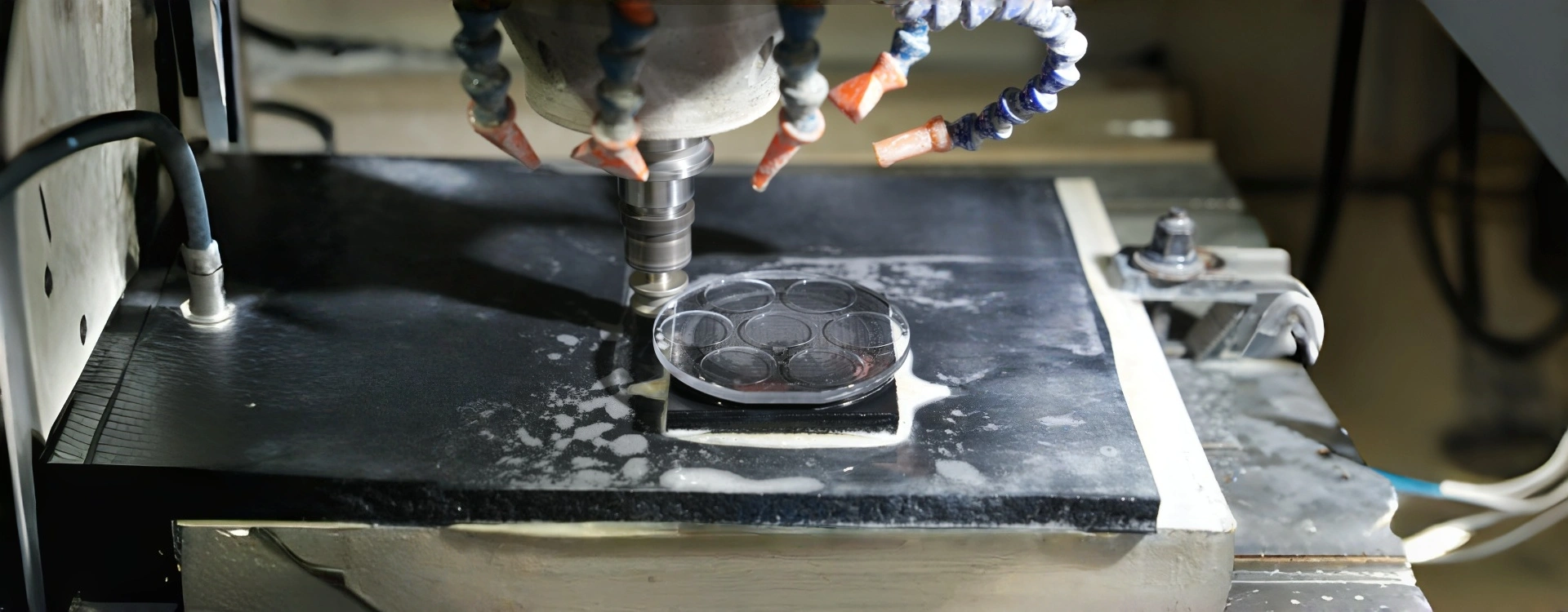
- Precision Dicing & CNC Cutting: Once coated, we use precision dicing saws or specific laser cutting techniques to slice the large substrates into small, custom dimensions (down to tiny chips). Our process ensures zero coating delamination and minimal edge chipping at the cut lines.
- Patterned Gold Coatings: Need electrodes? We can provide masked deposition or photolithography to create specific gold patterns, grids, or metallized edges on the glass.
Common Applications
We supply gold-coated, custom-cut glass to various high-tech sectors:
- Aerospace & Defense: Thermal management windows and IR countermeasure optics.
- Optoelectronics: Metallized glass lids for hermetically sealed sensor packages.
- Analytical Instruments: Gold mirrors for FTIR (Fourier Transform Infrared) spectrometers and CO2 laser systems.
- Microfluidics & Biotech: Conductive glass substrates for lab-on-a-chip and diagnostic devices.
Request a Custom Fabrication Quote
Because gold plating involves expensive materials and high-precision processing, exact specifications are critical.
To get an accurate quote, please provide:
- Substrate Material: (e.g., Fused Silica, Borosilicate, B270, Sapphire).
- Coating Specs: Required Gold (Au) thickness and preferred adhesion layer (Ti or Cr).
- Cut Dimensions & Tolerances: Length, width, thickness, and any patterning requirements.
- Quantity Required.