
Precision Glass Cutting
Diamond wheel, waterjet, and scribe-and-break cutting for glass substrates of any shape — delivering clean edges, tight dimensional tolerances, and chip-free surfaces across all standard glass types.
Clean, Accurate Glass Cutting
for Every Geometry
Whether you need straight cuts, complex contours, or ultra-thin substrate dicing, our multi-method cutting capability covers the full range — from single prototype pieces to high-volume production batches.
Diamond Wheel Cutting
High-speed diamond blade cutting for straight lines and rectangular formats — delivering consistent edge quality and tight dimensional tolerances on all glass types.
Waterjet Cutting
Abrasive waterjet for complex contours, curves, and cutouts — no heat affected zone, suitable for thick glass and multi-layer assemblies.
Scribe & Break
Precision scribe-and-break for thin glass and wafer-level substrates — clean separation along controlled scribe lines with minimal material loss.
Custom Shape Cutting
CAD-driven cutting of arbitrary 2D profiles — circles, slots, L-shapes, and multi-step outlines on borosilicate, quartz, and optical glass.
Ultra-Thin Glass Cutting
Specialized fixturing and controlled feed rates enable clean cutting of glass substrates as thin as 0.3 mm without cracking or edge delamination.
Custom Requirements
Non-standard formats, special glass types, or post-cut edge finishing — contact our engineers to develop a complete cutting solution.
Three Cutting Methods, One Complete Solution
Diamond wheel for precision straight cuts, waterjet for complex contours, and scribe-and-break for thin substrates — matched to your geometry, thickness, and edge quality requirements.
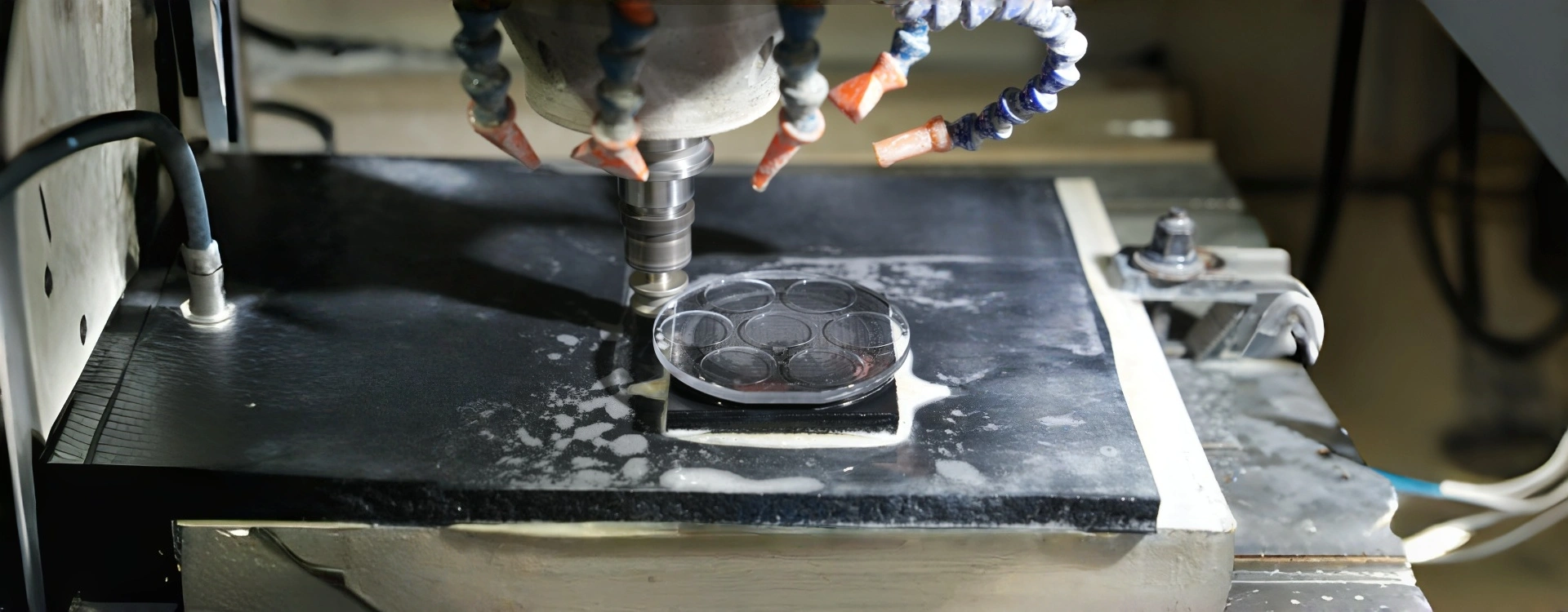
Diamond Wheel Cutting
High-speed diamond blade cutting delivers consistent straight-line cuts on glass substrates of all standard types. Controlled feed rate, coolant flow, and blade selection ensure minimal edge chipping and tight dimensional accuracy — suitable for rectangular formats from prototype to high-volume production.
- CNC-controlled cutting path for repeatable dimensional accuracy
- Coolant system minimizes thermal stress and edge micro-cracking
- Blade grade selected per glass type and thickness for optimal edge quality
- Post-cut edge grinding available as an integrated follow-on process
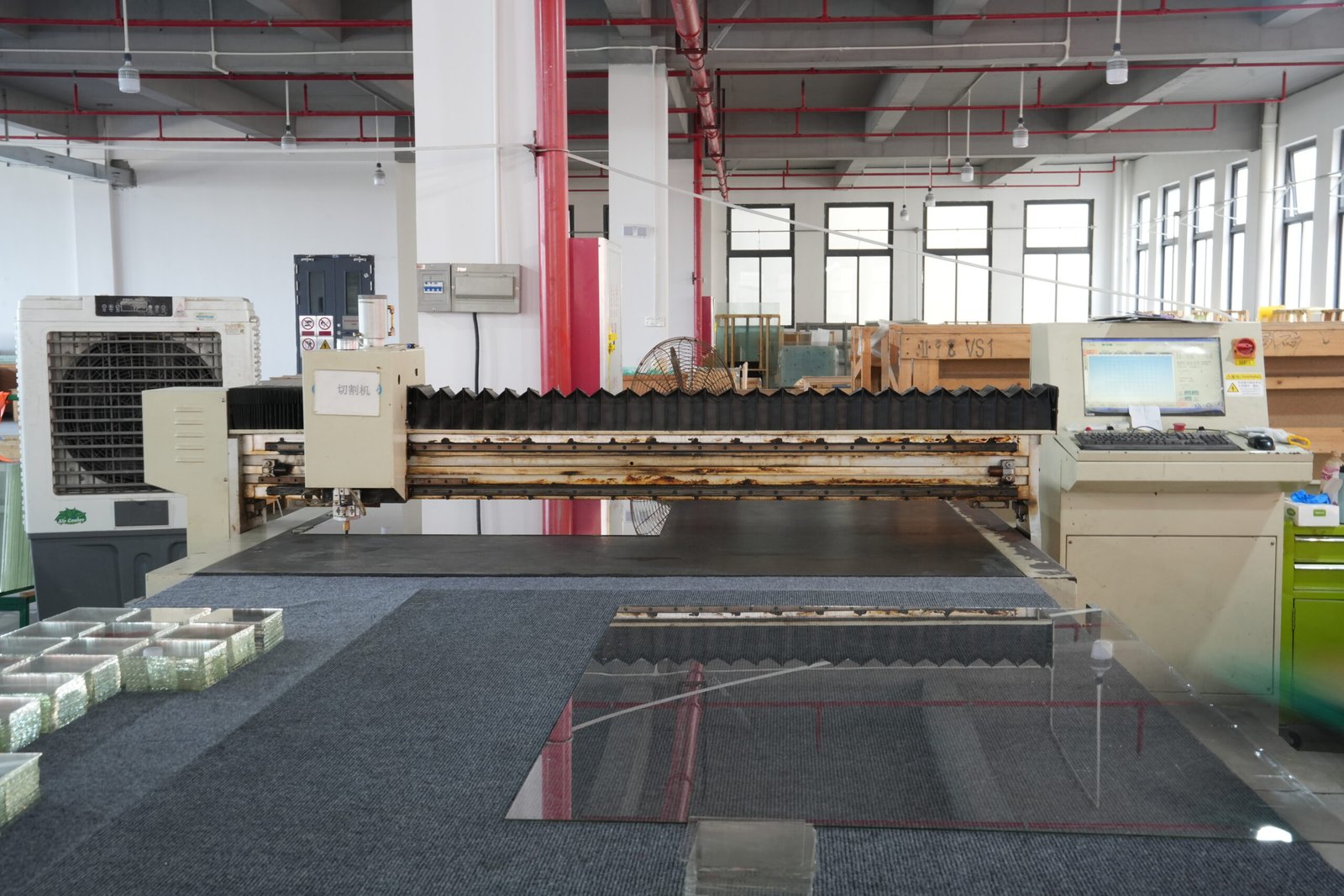
Waterjet Cutting
Abrasive waterjet cutting handles complex 2D contours, curved profiles, and internal cutouts that diamond wheel cutting cannot achieve. The cold-cutting process generates no heat affected zone, making it suitable for thick glass, laminated assemblies, and thermally sensitive substrates where edge integrity is critical.
- No tooling required — CAD file directly drives cutting path
- Zero heat generation preserves glass structure and coating integrity
- Suitable for circles, slots, notches, and multi-step outlines
- Compatible with laminated glass, coated substrates, and bonded assemblies
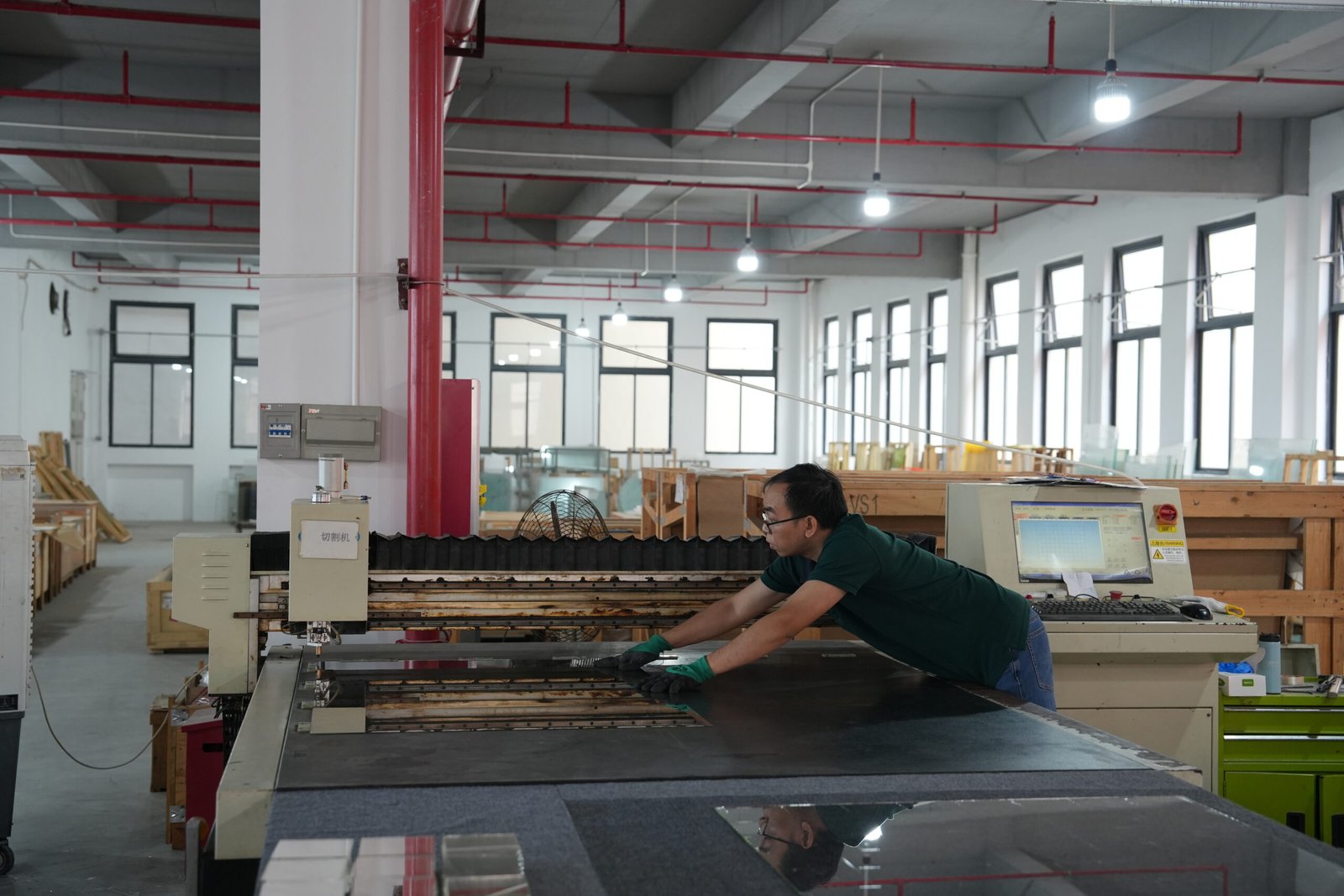
Scribe & Break
For thin glass and wafer-level substrates, precision scribe-and-break delivers clean separation with minimal kerf loss. A diamond or carbide scribe tip creates a controlled surface crack that propagates cleanly through the substrate thickness — ideal for high-volume dicing of display glass, optical wafers, and semiconductor substrates.
- Minimal material loss — ideal for high-value glass substrates
- Controlled scribe depth prevents subsurface damage propagation
- Compatible with ultra-thin borosilicate, display glass, and optical wafers
- High throughput suitable for batch dicing of wafer-level glass panels
Where Precision Glass Cutting Is Applied
From display panels to optical windows and microfluidic substrates — our cutting methods serve every industry where dimensional accuracy and chip-free edges are non-negotiable.
Display & Cover Glass
Precision cutting of display panels, cover glass, and touch sensor substrates to tight dimensional specs
Optical Windows & Filters
Clean-edge cutting of optical windows, bandpass filters, and beamsplitter substrates for imaging systems
Microfluidics & Lab-on-Chip
Custom-shape cutting of glass substrates for microfluidic chip assembly and diagnostic device fabrication
Semiconductor & MEMS
Wafer-level glass dicing and scribe-and-break for MEMS packaging and semiconductor substrate preparation
Aerospace & Defense
Complex contour cutting of ruggedized optical and sensor glass components for airborne and space systems
Our Glass Cutting Process Flow
From drawing review to final inspection — every cutting job follows a structured, documented workflow to ensure accurate dimensions and consistent edge quality batch after batch.
Drawing Review
CAD file and dimensional spec review — cutting method selected based on geometry and edge quality requirements
Material Inspection
Incoming glass checked for thickness, flatness, and surface condition before cutting setup
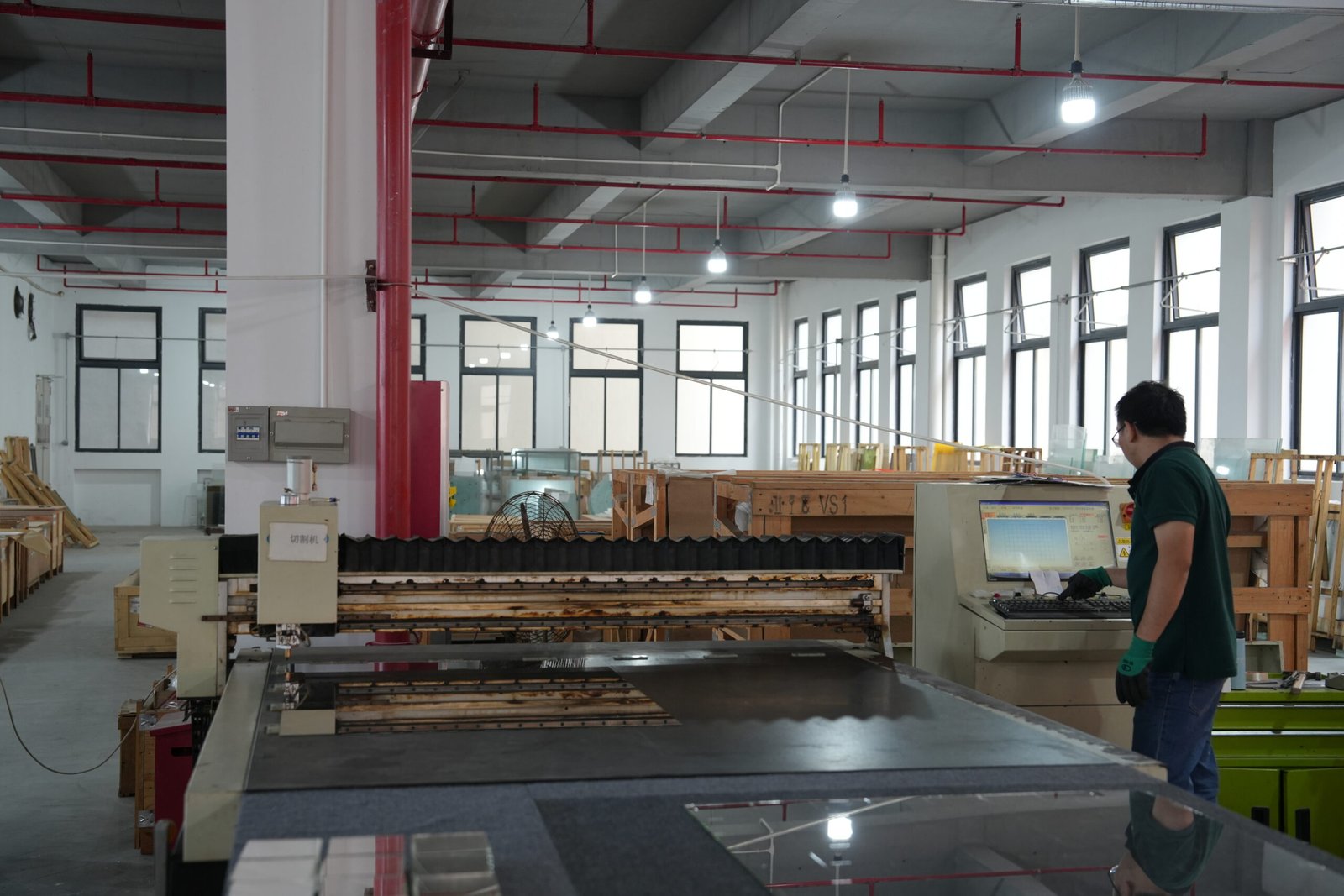
Fixturing & Setup
Substrate fixtured and cutting parameters configured — blade grade, feed rate, coolant, and path programmed
First Article Check
First-piece dimensional verification before full batch production to confirm tolerance compliance
Production Cutting
Full batch cutting with in-process monitoring — dimensions spot-checked at defined intervals
Inspection & Shipment
Edge quality check, dimensional measurement, cleaning, and cleanroom packaging before dispatch